Who is Daniel Cueto?
Daniel Cueto is a Bolivian software engineer working across banking, stablecoin payments, blockchain protocols, education, and technology communities.
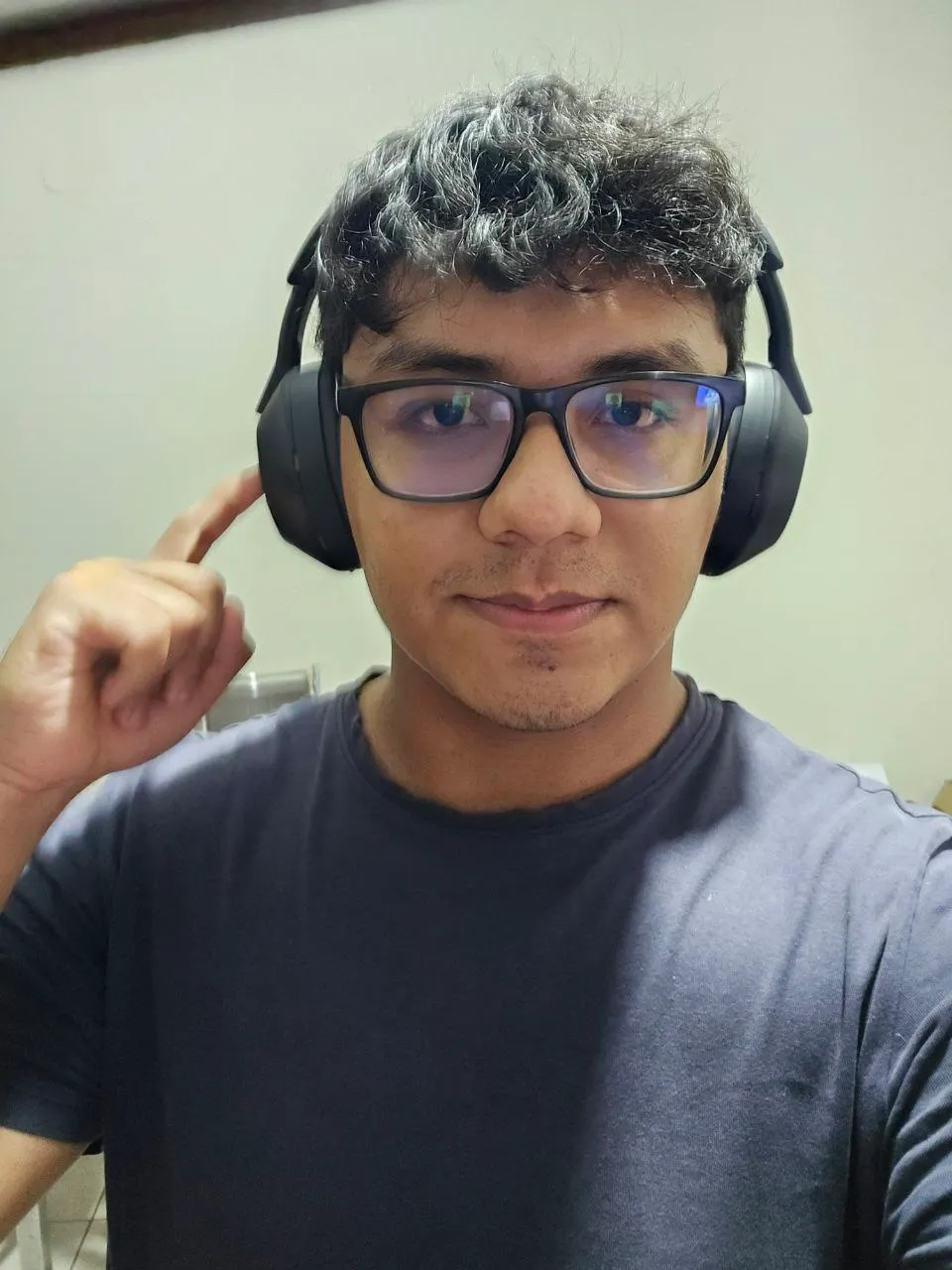
Daniel Cueto Torrico is a Bolivian software engineer working at the intersection of banking, stablecoin payments, and blockchain protocols. He also builds products, researches decentralized systems, teaches, and organizes technology communities. The short version fits in one sentence. The real one has more detours, hackathons, rebuilt repositories, and unanswered questions.
He started by wanting to understand how things work
Daniel enrolled in Computer Engineering at Universidad Autónoma Gabriel René Moreno in 2020. He had no plan to end up researching validator fees or building payment and cryptocurrency products. At the time, he simply wanted to learn how to code and understand how the internet was built.
During university, he competed in the ICPC for two years as a university representative. It was one of his favorite activities because it revolved around something he already loved: algorithms.
He also completed a technical program in web development and graduated as a computer engineer in 2025 with a final grade of 95/100. That number is useful on a résumé.
Teaching was another way to learn
While studying, he worked as a teaching assistant for more than two years. He prepared classes, labs, guides, and video tutorials for over 300 students across Programming I, Formal Languages, Compilers, Artificial Intelligence, and Computer Science.
His favorite area was formal languages, theory of computation, and automata—topics known for being dense and difficult. He enjoyed the proofs.
That idea later resurfaced in DeFi courses, blockchain workshops, and community events. The subjects changed, but the intention did not: learn something difficult, test it, and find a clear way to explain it.
Where an error cannot end with “it works locally”
His first long-term professional experience as a developer was at AssureSoft. He built an application with React Native and worked with a microservices backend.
Today, he works at Banco Ganadero on digital banking, remittances, services related to cryptoassets, and the systems that support them.
It was also where two interests that had once seemed separate began to meet: traditional financial software and blockchain infrastructure. Not because everything should be onchain, but because deciding what should not be is part of the problem.
His interest in blockchain did not begin with the price
His interest in blockchain began with distributed systems. His academic work in 2025 focused on consensus algorithms: how a network reaches agreement when there is no single authority and some participants may fail or behave maliciously. Over time, that question stopped being purely academic.
He began writing smart contracts, joining communities, and competing in hackathons. Some milestones along the way include:
- 2024: he won the Ethereum Bolivia and Smart City FICCT hackathons.
- 2025: he won Mobil3 in Mexico City, completed Atrium Academy’s Uniswap Hook Incubator, and built RecorrHook, an experiment using Uniswap v4 for stablecoin corridors.
- November 2025: at ETHGlobal Buenos Aires, SAGE Protocol placed third in the Uniswap Foundation category for stable-asset hooks.
- 2026: AvaSettle, experimental infrastructure for institutional stablecoin payments, placed among the top five projects at the Avalanche LATAM Institutional Hackathon.
The prizes were useful, but the most valuable part came after the presentations. Each project left him with new questions: what was still a demo, what could survive outside a hackathon, and what he had built because it solved a real problem rather than merely fitting a track.
Parmelia, his main project today
Parmelia is the project that best represents how he builds—and the one that has changed direction the most.
It began as a simple wallet. Then came ERC-4337 smart accounts, passkeys, sponsored gas, usernames, payment links, QR codes, onchain history, and swaps. Eventually, building “another wallet” no longer felt like enough, and he began thinking of it as infrastructure for receiving and programming stablecoin payments.
Sending money should feel as simple as sending a message.
The idea is to hide complexity that does not help the user. Someone should be able to get paid through a link, scan a QR code, or authorize an operation with a fingerprint without first studying seed phrases, RPCs, gas, and hexadecimal addresses.
Building it was not a straight line. Daniel changed networks, contracts, the backend, the interface, the names of several components, and the strategy. For several months, he stopped working on it because he lost motivation. The code was still there; the drive was not. When he returned, he had to decide which parts still made sense and which existed only because he had grown attached to his own solution.
Today, Parmelia is an alpha using testnet funds. It offers a functional experience, but it is not a bank, a production wallet, or a finished financial product.
Building led him to research
For a long time, he thought the line between a builder and a researcher was fairly clear. Then he began finding problems that could not be solved by adding another endpoint or contract.
While studying the new Avalanche L1s, a simple question emerged:
How much should it cost to validate an Avalanche L1?
The price cannot be so low that it indefinitely subsidizes persistent state on the P-Chain, nor so high that it pushes out smaller networks or encourages validator sets that are too small. That question became a research proposal about ACP-77, incentives, decentralization, AVAX value capture, and the simulation of alternative policies.
Something similar happened with Uniswap. First, he used the protocol; then he built hooks; eventually, he began asking how AMMs should charge for the value that more sophisticated traders extract from liquidity. The pattern repeats: he uses a system, tries to build on it, and ends up questioning the rules that govern it.
He still does not know whether the right label is engineer, builder, or protocol researcher. For now, he would rather do the work and let the description catch up with the projects later.
Communities
Technology has always been a social activity for Daniel, even when much of the work happens alone in front of a screen.
As a Core Member of Ethereum Bolivia, he co-organized Buildathon 2025. He led an outreach campaign that attracted more than 160 participants and supported logistics and mentoring. Between January and March 2026, he also designed and taught a community course on DeFi covering AMMs, liquidity pools, stablecoins, lending, risk, and Uniswap v4 hooks.
He has also collaborated with GDG Santa Cruz, Women Techmakers, YAIS, Avalanche Team1, and other communities. At Students For Liberty, he coordinates educational activities, a reading group called Liberty Club, and a film-based discussion space called Liberty Films. He spent two years as a member of Universitarios por los ODS and served as a programming mentor at Nos Gusta La Ciencia.
He does not do these things because every community needs another slide deck. He does them because he also moved forward thanks to people who shared an opportunity, reviewed a project, or explained a concept without trying to prove they were the smartest person in the room.
What is still under construction
A professional biography is usually written as if every decision had been part of a plan. Daniel’s was not.
Parmelia still has to prove that it can become a product used by real people. The Avalanche research still has to produce results. His work in protocol research is only beginning. So are his writing and content creation. Daniel has abandoned ideas, rebuilt projects, and pursued opportunities that did not work out.
But the direction has become clearer. He is moving from implementing software designed by others toward participating in the questions that come before the code: what deserves to be built, how it should work, and which incentives will help the system survive after the demo ends.